Elder care robots are moving into a harder question than whether a machine can walk or speak: can it help an older person stay safe without taking control away? The useful systems focus on narrow tasks, such as reminders, lifting help, remote checks, and movement around a home or care site.
- The useful work: reminders, alerts, transport of small items, and remote check-ins
- The main limit: a robot can assist with care tasks but cannot replace human judgment or touch
- The buying test: check the task, setting, safety plan, and human support before the robot
Care needs time, not just machines
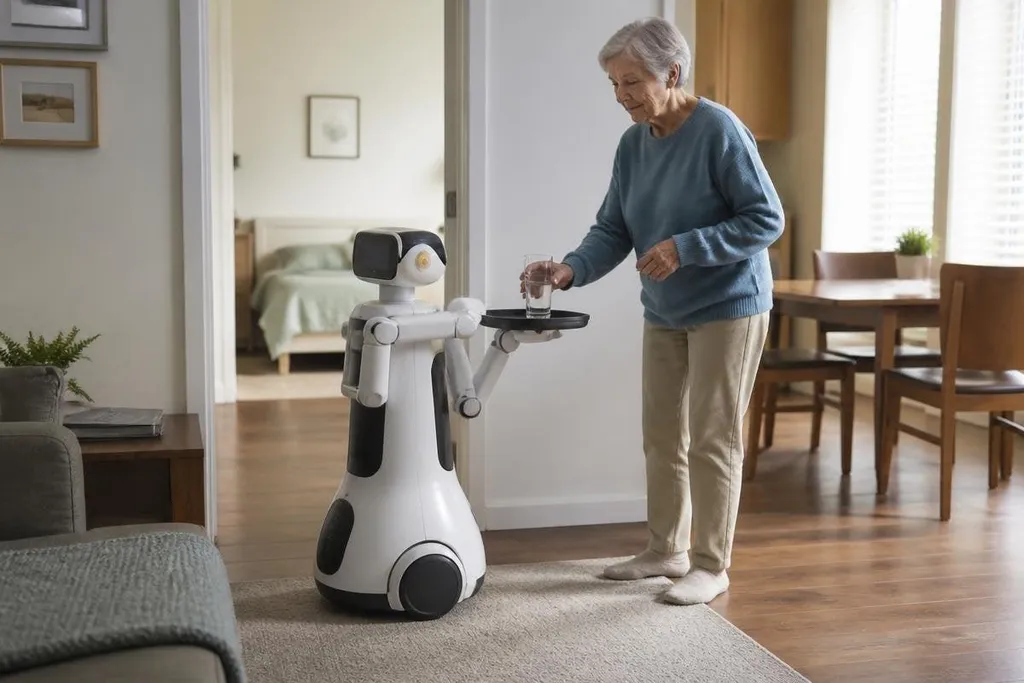
An older person may need help with several small jobs across a day. A reminder to take medicine, a call after a fall, or help bringing a cup from the kitchen can each take only a few minutes, yet the need returns every day.
That pattern gives robots a clear place. It can repeat a scheduled task at a set time without asking a family member or care worker to stop another job. It can also send an alert when a person misses a check-in or leaves a safe area, if the system has the needed sensors and software.
The value depends on the task. Moving a tray across a flat room is a different problem from helping someone stand after a fall.
The first may suit a mobile platform; the second needs careful physical support, force control, and a human plan for emergencies.
What these robots can do
Care robots come in several forms. Some stay in one place and support video calls, reminders, or basic voice control. Others move through a home, carry light objects, watch for hazards, or connect a person to a remote carer.
A mobile robot needs more than wheels and a camera. It must build a map of the room, avoid furniture and people, handle poor lighting, and stop when its path is blocked. A system using LiDAR, which measures distance with light, may detect walls and furniture, but detection does not mean the robot understands what a person needs.
That distinction matters for care. It may notice that someone is on the floor, yet still lack enough information to judge an injury. It can call for help. It should not decide that help is unnecessary.
That boundary puts trust ahead of clever demos. Elder care robotics reporting from Robot24.com can show what a machine did after a fall alert and where a caregiver still had to decide.
The hard part is trust
An elder care robot enters a private space. Its microphones, cameras, location data, and alert records can expose details about a person’s health and daily life. A buyer needs clear answers about what the robot records, where data goes, who can see it, and how long the company keeps it.
Physical safety needs the same care. A robot that drives near a walking aid must detect feet, pets, loose rugs, and sudden movement. One that touches or lifts a person needs limits on speed and force, plus a clear way to stop it.
Human contact also matters. A system that replaces a visit with a screen may reduce isolation for one person and increase it for another. I’d treat a care robot as extra help around a human care plan, not as a substitute for one.
Cost adds another test. The price includes the robot, installation, charging, software, repairs, training, and a person who responds when an alert arrives. A low purchase price says little if the service fee continues for years or spare parts are hard to get.
A practical buying check
Use this list before choosing a robot for an older person or a care site:
- Name the task: write down the exact job and how often it happens.
- Check the room: measure door widths, floor changes, charging space, and likely obstacles.
- Ask about failure: find out what happens after a blocked path, lost connection, low battery, or false alert.
- Set data rules: confirm recording, storage, access, deletion, and consent settings.
- Plan human response: name the person who receives alerts and the time they can respond.
- Price the full term: include setup, monthly fees, repairs, training, and replacement parts.
A good trial should test the robot in the actual home or care setting, with the older person involved in the decision. Watch the system during ordinary tasks, not only a prepared demonstration, and record the cases where a person must step in.
The next useful measure is simple: how many care tasks can the robot handle safely over a month, and how much human time does it return without reducing contact? That answer matters more than a robot’s voice, face, or list of features.